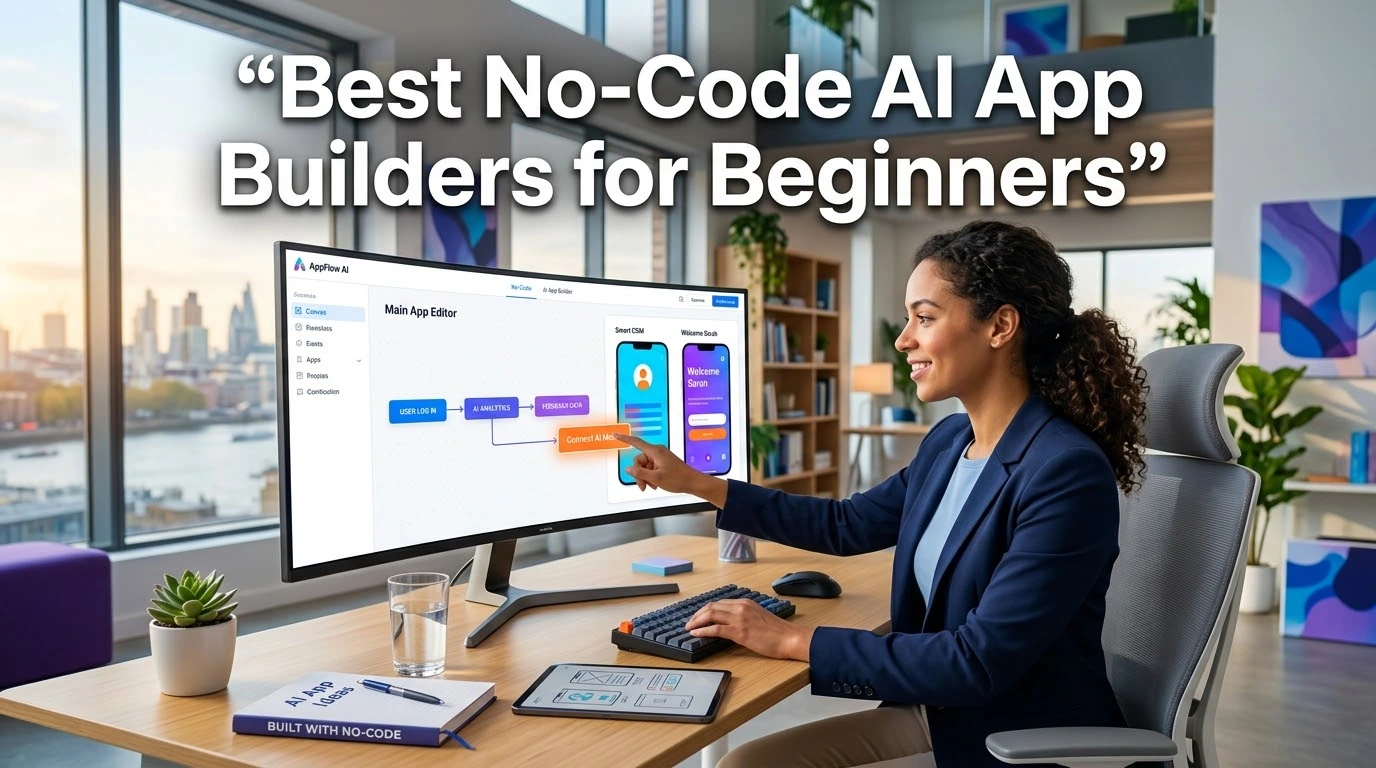
No-code AI app builders allow founders, freelancers and small teams to test software ideas without writing every line of code. They can be useful for prototypes, internal tools and simple customer workflows. A wider overview is available in AI tools for small businesses.
Begin with a narrow use case
A strong first project solves one defined problem, such as collecting enquiries, summarising documents or creating a simple appointment workflow. Avoid trying to build a complete platform before you understand what users actually need.
Important features
Check whether the builder supports databases, user permissions, payment integrations, automation, responsive design and data export. AI features should be easy to test and should provide controls for reviewing generated results. Content creators can compare AI tools for content creators.
Understand the limits
No-code tools can become expensive as usage grows. They may also limit design flexibility, performance or access to the underlying code. Read the pricing and ownership terms before building a business-critical product.
Test with real users
Create a basic version and ask a small group of users to complete the main task. Watch where they hesitate, record their questions and improve the workflow before adding more features. Planning resources such as AI tools for bloggers may help with documentation.
No-code AI development is valuable because it shortens the distance between an idea and a working test. It should be treated as a practical starting point, with professional development added when complexity and scale require it.