Introduction: The Backlink Bottleneck for Small Agencies
If you are running a boutique digital agency, a service business, or a solo consultancy in the US or UK, you know the drill. You publish thoroughly researched, highly optimized content, only to find it buried on page 6 of Google. Meanwhile, enterprise-level competitors with massive budgets dominate the top 3 spots for almost every lucrative commercial phrase.
The reason isn’t that their content is vastly superior. The reality is simple: Domain Authority and Entity Trust.
For a long time, the advice given to small agencies was to “just write great content and the links will come.” In 2026, that advice is dead. Without a structured, strategic approach to link building, great content remains invisible.
This guide breaks down the exact, human-driven framework small agencies need to secure contextually relevant, high-impact backlinks without risking manual penalties or burning out their internal resources.
Step 1: Ditch the “Spray and Pray” Outreach Mindset
Most outreach fails before the email is even opened. Website managers and blog editors in Western markets receive dozens of automated outreach emails every single day. They can spot a template from a mile away.
To build links that actually pass equity and drive targeted referral traffic, you need to transition from mass emailing to targeted partnership building.
What Doesn’t Work Anymore:
- Automated, robotic pitch templates with fake compliments (“I loved your blog post!”).
- Buying cheap links from public “link farm” spreadsheets.
- Pitching irrelevant topics just to get an anchor text placed anywhere.
What Works in 2026:
- The “Micro-Value” Pitch: Offering something genuinely useful—like updating a broken resource, fixing an outdated statistic, or providing a custom graphic—before asking for anything in return.
- Topic-to-Domain Match: Ensuring the linking site shares a direct contextual overlap with your service niche. A single link from a relevant industry blog carries more weight than ten links from generic news aggregators.
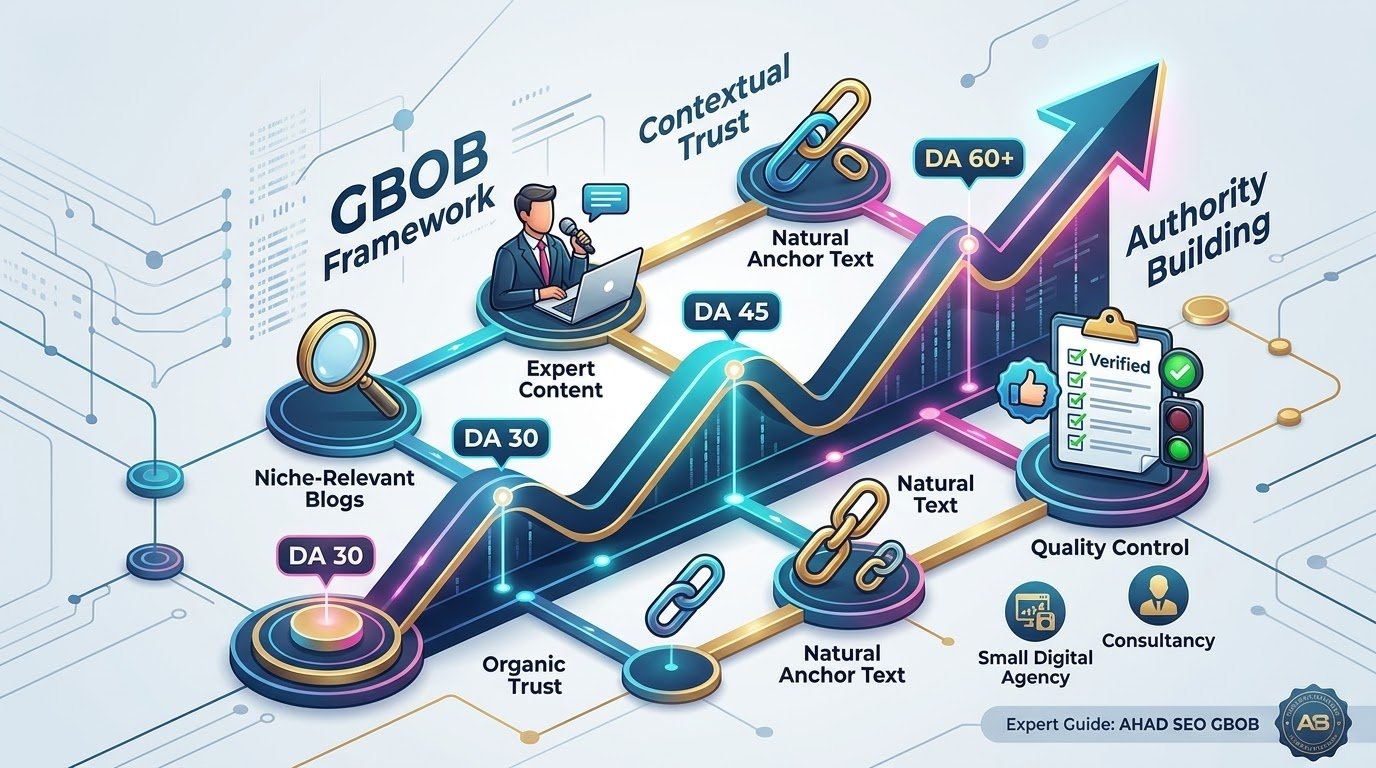
Step 2: The GBOB Framework (Guest Blogging for Organic Growth)
Guest blogging remains one of the most reliable methods for new and growing websites to establish authority, provided it is executed correctly. When done with a focus on editorial standards rather than sheer volume, it solves two problems at once: it provides the host site with expert content and earns your brand a contextual vote of confidence.
THE MODERN GBOB PIPELINE:
- Identify Niche-Relevant Blogs (DR 30 to 60)
- Audit Content Gaps in Their Top-Performing Posts
- Pitch Original Data or Real-World Case Studies
- Deliver Editorial-Grade Articles with Natural Co-Citations
- Maintain Long-Term Publisher Relationships
Related Resource: Learn how US businesses scale their reach with our guide on Guest Posting for Small US Companies.
Key Rules for Effective Guest Content:
- Target Mid-Tier Sites First: Don’t waste weeks pitching massive publications right away. Focus on active blogs with Domain Ratings between 30 and 60. These sites have real traffic, indexed pages, and manageable editorial response times.
- Anchor Text Naturalization: Avoid over-optimizing exact-match commercial anchors (e.g., “cheap SEO agency”). Instead, use partial-match phrases, branded terms, or natural contextual anchors.
- Co-Citation Quality: Surround your target link with references to other respected, non-competing industry sources. This builds editorial trust and makes the link look organic to search engine crawlers.
Step 3: Turning Low-Competition Keywords into Authority Assets
To make link acquisition easier, your on-site content must serve as a reference point. When industry writers look for facts, statistics, or actionable workflows to cite in their own blogs, your content should be what they find.
Instead of competing for saturated keywords like “Best Marketing Tools,” target low-competition, highly specific intent variations:
- Instead of: “SEO Strategies” → Target: “How small agencies handle client reporting bottlenecks”
- Instead of: “Link Building Agency” → Target: “Boutique agency link building workflow for local clients”
When you create deep, comprehensive guides around these hyper-focused queries, you capture traffic that is ready to convert, while naturally attracting organic citations from other creators in your space.
Step 4: Quality Control & Avoiding Penalty Risks
Not all backlinks are created equal. As search engine algorithms become more sophisticated at evaluating link context and user engagement, low-quality placements can actively hurt your site’s visibility.
Before securing or agreeing to a guest feature or resource placement, run the target domain through a simple checklist:
PUBLISHER QUALITY CHECKLIST:
- Is the site indexed and actively receiving organic search traffic?
- Is the ratio of outbound links to unique content reasonable?
- Does the blog publish real author bios with verified profiles?
- Is the site free from aggressive pop-ups and low-quality ads?
- Is the primary audience located in your target region (US/UK)?
If a site fails two or more of these checks, pass on it. A clean, authoritative link profile built slowly will always outperform a bloated profile filled with questionable placements.
Conclusion: Consistent Action Beats Massive Budgets
Scaling a small agency’s online authority doesn’t require a six-figure marketing budget. It requires discipline, high editorial standards, and a systematic approach to outreach and content creation.
By publishing deeply valuable, search-focused content on your own domain and building genuine publisher relationships through structured guest blogging, your agency can steadily climb the search rankings, bypass bigger competitors, and attract high-value clients predictably.
Recommended Further Reading:
great guide on link building very useful tips for small agencies
Excellent article! I completely agree that scaling a business isn’t just about working harder, but about creating efficient systems. AI tools combined with high-quality SEO backlink strategies really set the foundation for long-term authority. Valuable read!