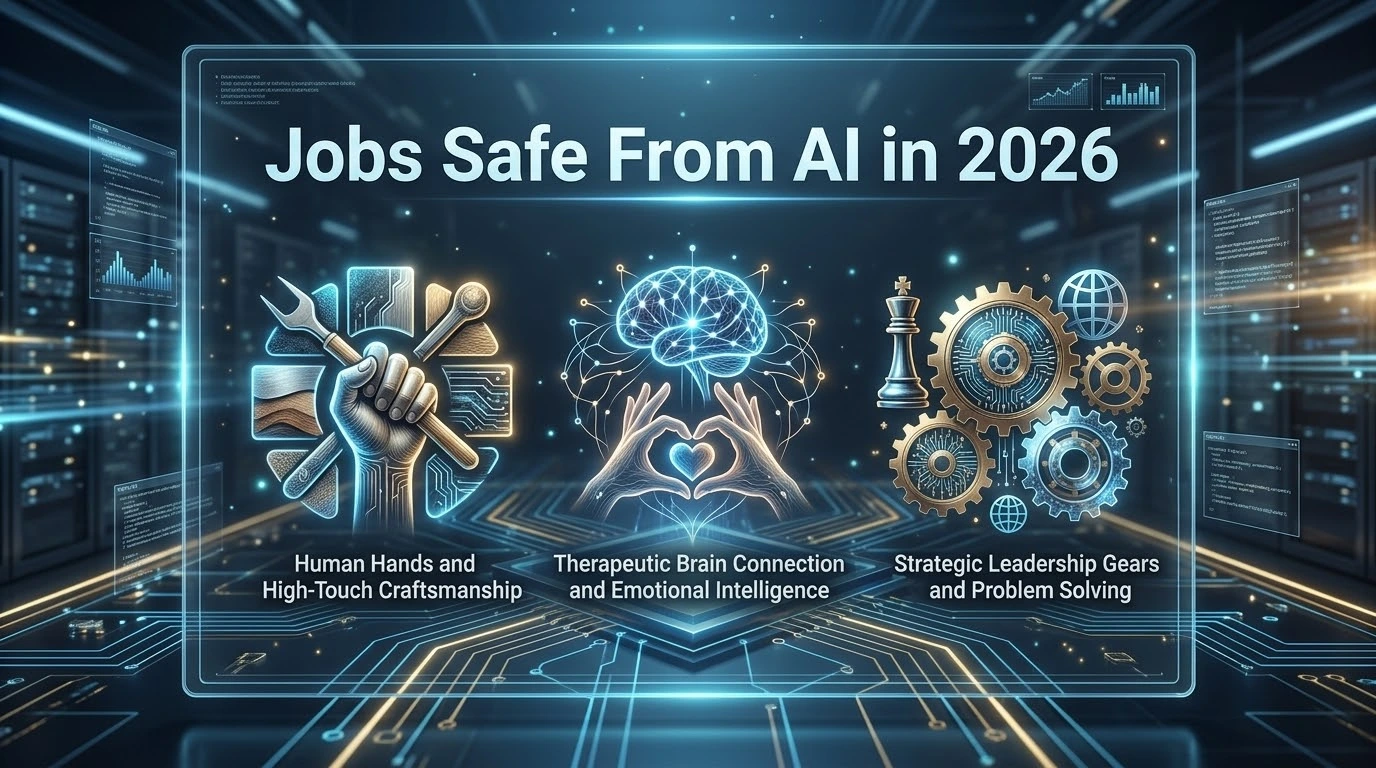
Rapid advances in workplace automation, machine learning algorithms, and natural language processing have raised valid concerns across the global workforce regarding long-term job security. While modern software efficiently automates routine data entry, code drafting, and content summarization, certain professional domains require distinctly human cognitive capabilities. Understanding what three jobs will not be replaced by AI in 2026 offers critical insights into building resilient, future-proof career paths.
Why Certain Human Roles Remain Unreplaceable
Artificial intelligence excels at rapid pattern recognition, processing vast data sets, and generating text based on statistical probabilities. However, automated systems lack fundamental human attributes necessary for complex societal roles:
- Genuine Empathy: The organic ability to process deep emotional contexts and build authentic personal relationships.
- Physical Dexterity: Adaptability required to navigate unpredictable, unstructured real-world physical environments.
- Ethical Accountability: Moral reasoning required to make high-stakes legal, medical, or systemic decisions.
1. Mental Health Professionals and Therapists
While conversational chatbots can provide basic coping scripts, true psychological healing relies entirely on human connection, trust, and subtle behavioral observation. Therapists, psychologists, and counselors interpret non-verbal cues, vocal nuances, and deeply personal life trauma that an algorithm cannot comprehend.
- Core Human Factor: Deep emotional nuance, therapeutic trust, and lived human experience.
- AI Limitations: Automated tools cannot feel empathy or establish authentic interpersonal connections.
2. Skilled Trade Workers (Electricians, Plumbers, Mechanics)
Skilled trades require physical adaptability, real-time spatial problem-solving, and precise hand-eye coordination in unpredictable physical locations. Every job site presents unique architectural challenges, vintage equipment variations, and hazardous environments that fixed robotics or software models cannot handle.
- Core Human Factor: Advanced physical dexterity, spatial reasoning, and real-time environment adaptation.
- AI Limitations: Robotics currently lack the mobile versatility and tactile feedback required for complex manual repairs.
3. Strategic Business Leaders and Executive Directors
While machine intelligence can generate data predictions, high-level corporate leadership requires navigating nuanced office politics, ethical trade-offs, crisis management, and long-term vision under extreme uncertainty. Executives must make final moral and financial decisions where no historical playbook exists.
- Core Human Factor: Visionary leadership, ethical judgment, and crisis management under pressure.
- AI Limitations: Algorithms provide static data analysis but cannot take moral or strategic responsibility for high-stakes decisions.
Human Roles vs. AI Automation Summary
Here is a quick snapshot comparing career categories against automation susceptibility:
| Career Field | Automation Risk | Primary Human Advantage | Role of AI Assistance |
|---|---|---|---|
| Mental Health | Very Low | Empathy & Emotional Trust | Session Summaries |
| Skilled Trades | Extremely Low | Tactile Physical Dexterity | Diagnostics & Scheduling |
| Strategic Leadership | Very Low | Ethical Judgment & Vision | Predictive Data Analysis |
Frequently Asked Questions (FAQs)
Can professionals in these fields use automation tools to improve productivity?
Yes, integration is common. For example, business leaders and managers frequently use software listed in our overview of best AI tools for small business owners in 2026 to handle routine administrative overhead.
Is technical education or study still relevant for young professionals?
Absolutely. Students learning modern skills can use automated research tools to accelerate study routines. Reviewing our guide covering smart AI tools for students in 2026 shows how to leverage technology responsibly without replacing fundamental knowledge.
How do computer systems process data compared to human thinking?
Generative software relies on pattern matching rather than human consciousness. For a deeper technical breakdown of software evolution, check out what are the 7 types of AI.
Final Thoughts
Understanding which careers remain safe from machine displacement allows individuals to focus on developing uniquely human skill sets—such as empathy, complex physical craftsmanship, and moral leadership. Combining human judgment with automated software ensures long-term career adaptability.